 Horn Mutes
Printers
These designs are intended for FDM (Fused Deposition Modeling) printers. FDM printers work by heating plastic filament and extruding it layer-by-layer to build a solid object. This method is fast, affordable, and produces excellent results for mute designs with reliable material properties and acoustic characteristics.
The mute designs have been tested and validated on two printers representing different price points. The Bambu Lab X1C (now succeeded by the H2C) offers flagship features and printing that just works with no hassle. The $500 Qidi Q2 produces quality prints, albeit somewhat less consistently than the X1C -- you'll spend some time troubleshooting. Both printers successfully printed all mute designs in PLA and PETG.
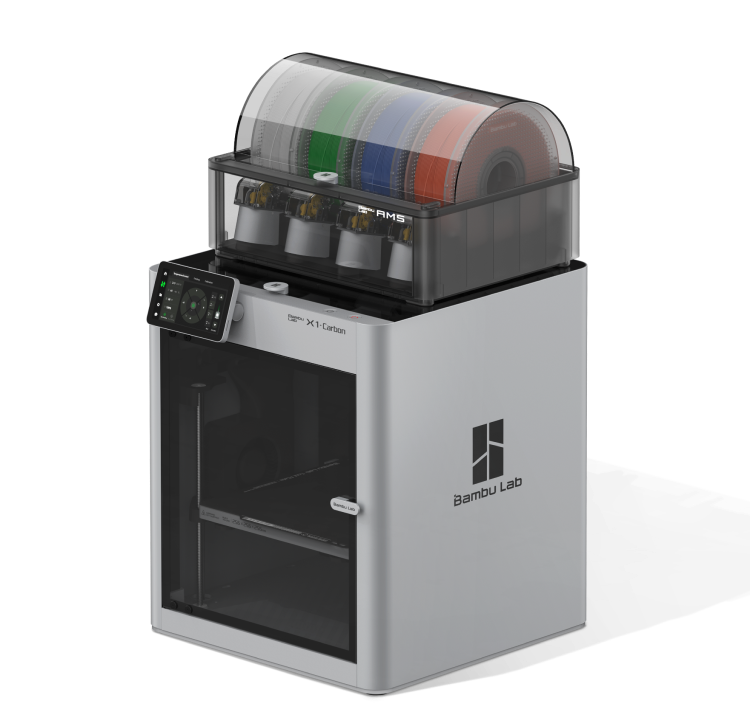
Bambu Lab X1C

Qidi Q2
Filaments
Each mute design has preferred materials. The right choice depends on printer capability, desired sound characteristics, and the specific mute model you're building.
Material Recommendations by Mute Type
Note: All of these materials work for Parduba and DePolis mutes.
Filament Options
PLA (Polylactic Acid)
Best for: Stop mute, DePolis mute. PLA is easy to print and produces good acoustic results, but is too brittle for the thin walls of the Rittich mute. Print at 200–210°C. Heated bed at 60°C recommended but not required. Apply glue stick for better bed adhesion.
PLA-Wood and PLA-Metal Composites
Specialty PLA filaments with wood or metal particles produce unique aesthetics and feel. PLA-Wood gives a natural, organic appearance with visible grain, while PLA-Metal adds weight and a metallic finish. Both print like standard PLA but may require a larger nozzle (0.6mm+) to prevent clogging. These two materials produce a lovely sound colors when used in a straight mute.
PETG (Polyethylene Terephthalate Glycol)
Best for: Rittich mute, durable all-purpose option. PETG is stronger and more flexible than PLA, making it ideal for mutes with thin walls or high stress areas. It's also more impact-resistant if the mute takes a hit. Print at 230–250°C. Heated bed at 80°C required. Glue stick strongly recommended to prevent parts from bonding too well to the bed. In a stop mute, it produces a nice, loud buzz sound. In a straight mute, it's primarily a dampener without a ton of color to it.
PAHT-CF (Polyamide High Temperature - Carbon Fiber)
Best for: Extreme strength and rigidity. PAHT-CF is a carbon fiber reinforced polyamide ideal for structural components requiring maximum stiffness. It produces durable mutes with excellent dimensional stability and acoustic properties. Print at 270–290°C. Heated bed at 100–110°C required. Use glue stick for adhesion. Requires hardened steel nozzle due to abrasive carbon fibers. For experienced makers.
TPU (Thermoplastic Polyurethane)
Best for: Flexible applications and dampening. TPU is a rubber-like flexible filament that can absorb vibrations. While not recommended for entire mutes, it's useful for gaskets, bumpers, or experimental designs exploring acoustic dampening. Print at 220–240°C with slow speeds (20–30 mm/s). Heated bed at 60°C recommended. Requires direct drive extruder for best results.
Moisture Management
Filament absorbs moisture from the air, which causes printing defects like bubbling, stringing, and weak layer adhesion. Store filament in airtight containers with desiccant packs. PETG, PAHT-CF, and TPU are particularly hygroscopic and should be dried before use if exposed to humidity for extended periods. Use a filament dryer or conventional oven at 50–60°C for 4–6 hours to remove absorbed moisture.
Related guides